How the practice thinks.
A shared language for complex wealth.
The practice works with a set of named frameworks: tools for seeing a situation clearly and deciding what to do. They are introduced here and explored in depth on the Approach page.
The Wealth Ladder
Where a wealth holder stands on a recognisable progression determines which structures are timely and which are premature.
The Three Profiles
Persistence, Sequencing and Instability: three legal biographies that decide which tools fit and which will fail.
The Five Dimensions of Protection
Operating-risk, asset, fiscal, family-governance and continuity: the five dimensions a complete structure must address.
The Complexity Budget
Every structure imposes maintenance. A simple architecture, governed consistently, outlasts an elaborate one left to degrade.
The Ninety-Day Absence Test
If the principal decision-maker were unreachable for ninety days, what would break? Each gap is a piece of work.
Notes from the practice.
Shorter written perspectives on sovereign architecture will be published here: residency, structure, family governance and continuity.
Until the first pieces appear, the frameworks above and the Approach page set out how the practice thinks. The book covers the same ground in full.

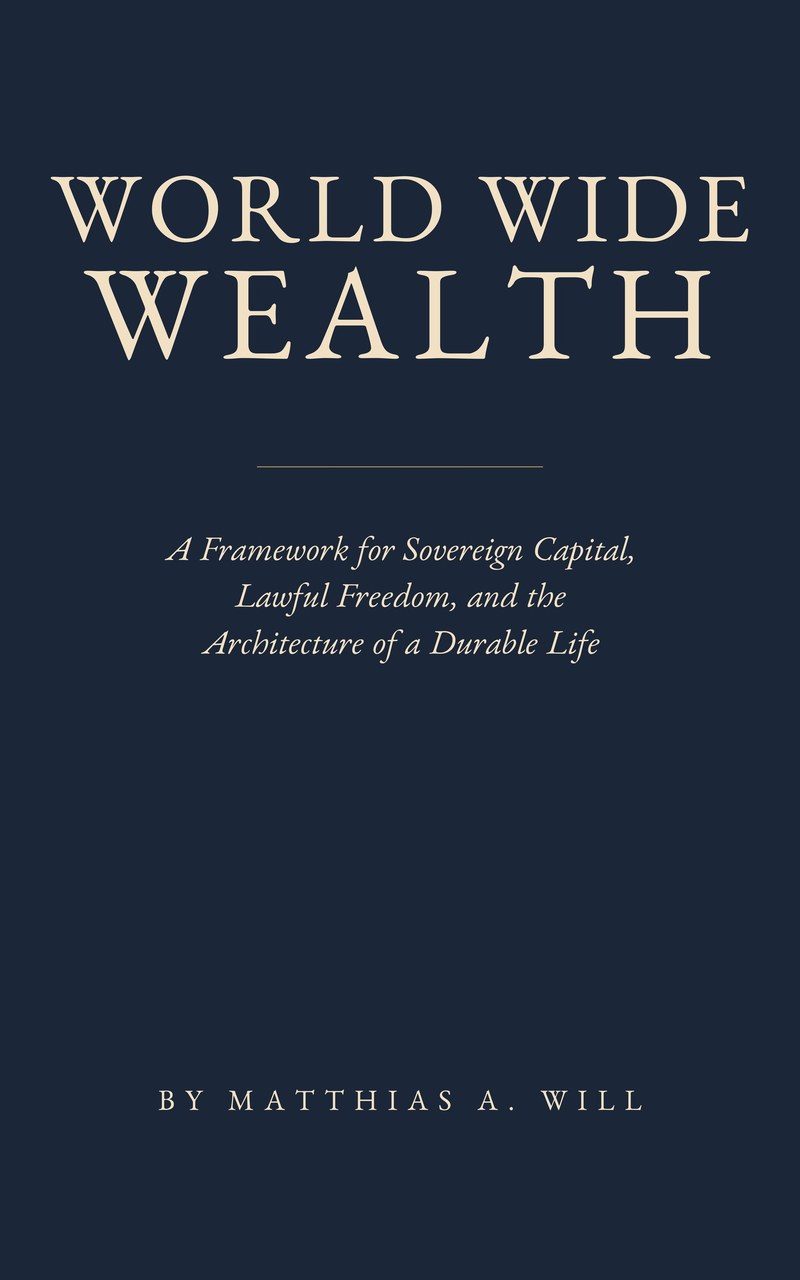
World Wide Wealth.
The frameworks, and the reasoning behind them, are set out in full in World Wide Wealth: what sovereign architecture requires, in what order, at what stage of wealth, and the specific failure modes to avoid.
Paperback and Kindle
From reading to a conversation.
If the thinking resonates, the next step is a private conversation about your own situation, before any structure is proposed.
Begin a conversation →